Downhill from Abra Málaga
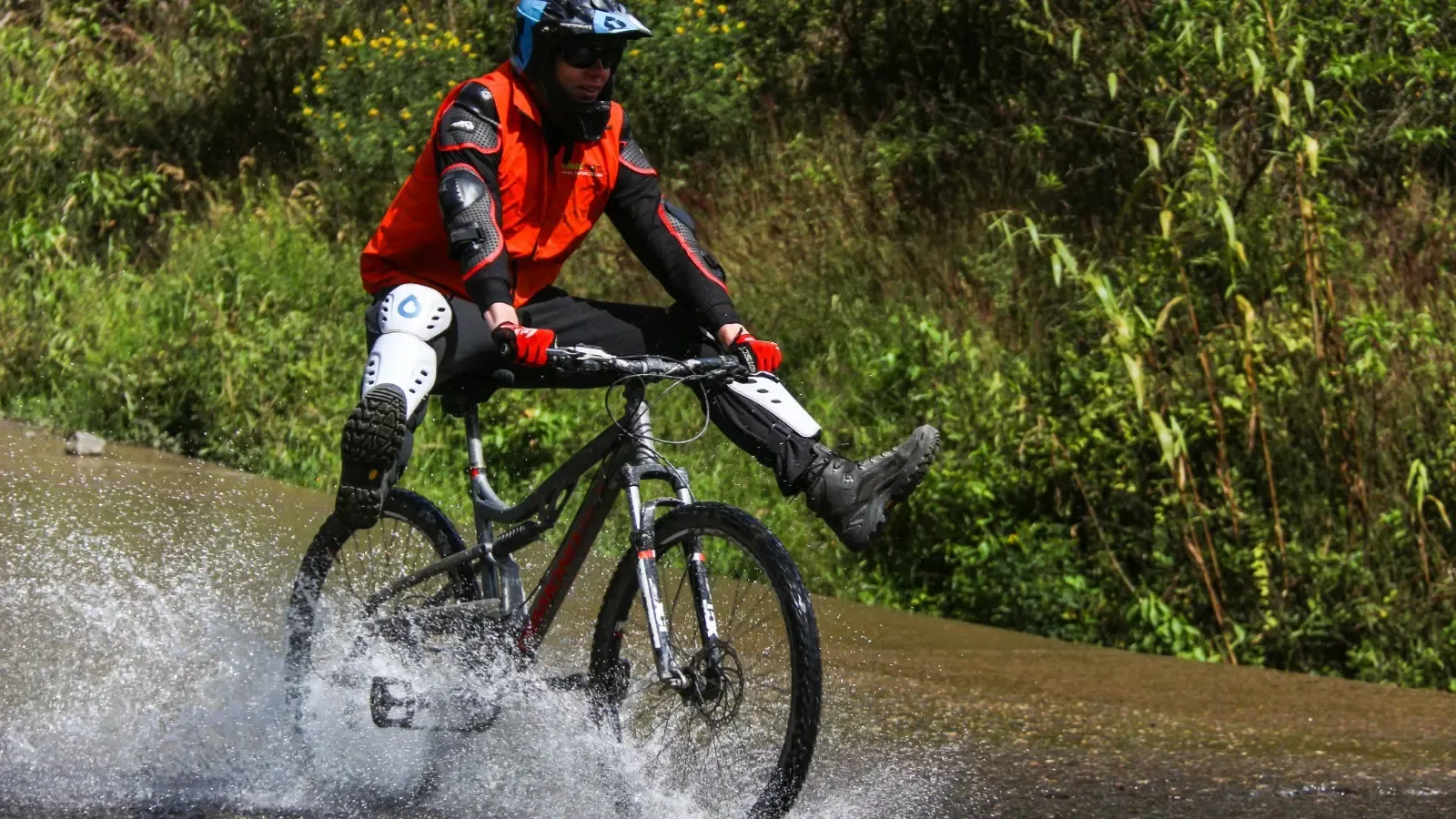
Roughly 60 km of downhill biking from 4,316 m into the high jungle, with a support vehicle behind the group.

 ← Back to experiences
Adventure
Multi-sport adventure
The 4-day Inca Jungle Trek is the most complete and least rushed way to reach Machu Picchu while mixing adrenaline with hiking. We start at Abra Málaga, 4,316 m above sea level, and ride downhill past glaciers and cloud forest to Santa María, with a rafting session waiting that same afternoon.
On day two we hike original Inca paths through coffee farms, banana groves and waterfalls to the Cocalmayo hot springs, the perfect place to rest tired legs. Next comes a zipline across the valley and an easy walk along the railway from Hidroeléctrica to Aguas Calientes.
The final day is a guided tour of Machu Picchu with an official guide before heading back to Cusco. It's designed for active travelers who want variety without the high-altitude demands of a classic trek: simple hotels with hot showers, small groups and safety gear checked for every activity.
Trip highlights
Roughly 60 km of downhill biking from 4,316 m into the high jungle, with a support vehicle behind the group.
A whitewater session led by certified river guides, with helmet and life jacket.
A hike along ancient trails through coffee farms, banana groves and viewpoints over the Vilcanota River.
Thermal pools at the foot of the mountains to soak after a long hiking day.
Several zipline cables and a hanging bridge near Santa Teresa.
About 2.5 hours with an official guide, prioritizing the classic Circuit 2A when available.
Your route day by day


All taken care of
Before you go
Helmet, gloves, knee and elbow pads and reflective vest for the bike descent.
Repellent, swimwear, sandals, windbreaker and a dry change of clothes.
Rafting depends on river levels; from December to March it may be replaced by another activity.
Frequently asked questions
We rate it moderate. The biking is almost entirely downhill on paved road, so it takes control more than fitness. The toughest day is day two: about 7–8 hours of hiking with a steady climb at the start and some narrow Inca path sections. The railway walk on day three is flat. If you exercise regularly and arrive in Cusco with a couple of days to acclimatize, you'll enjoy it without trouble. Our guides set the pace to suit the group.
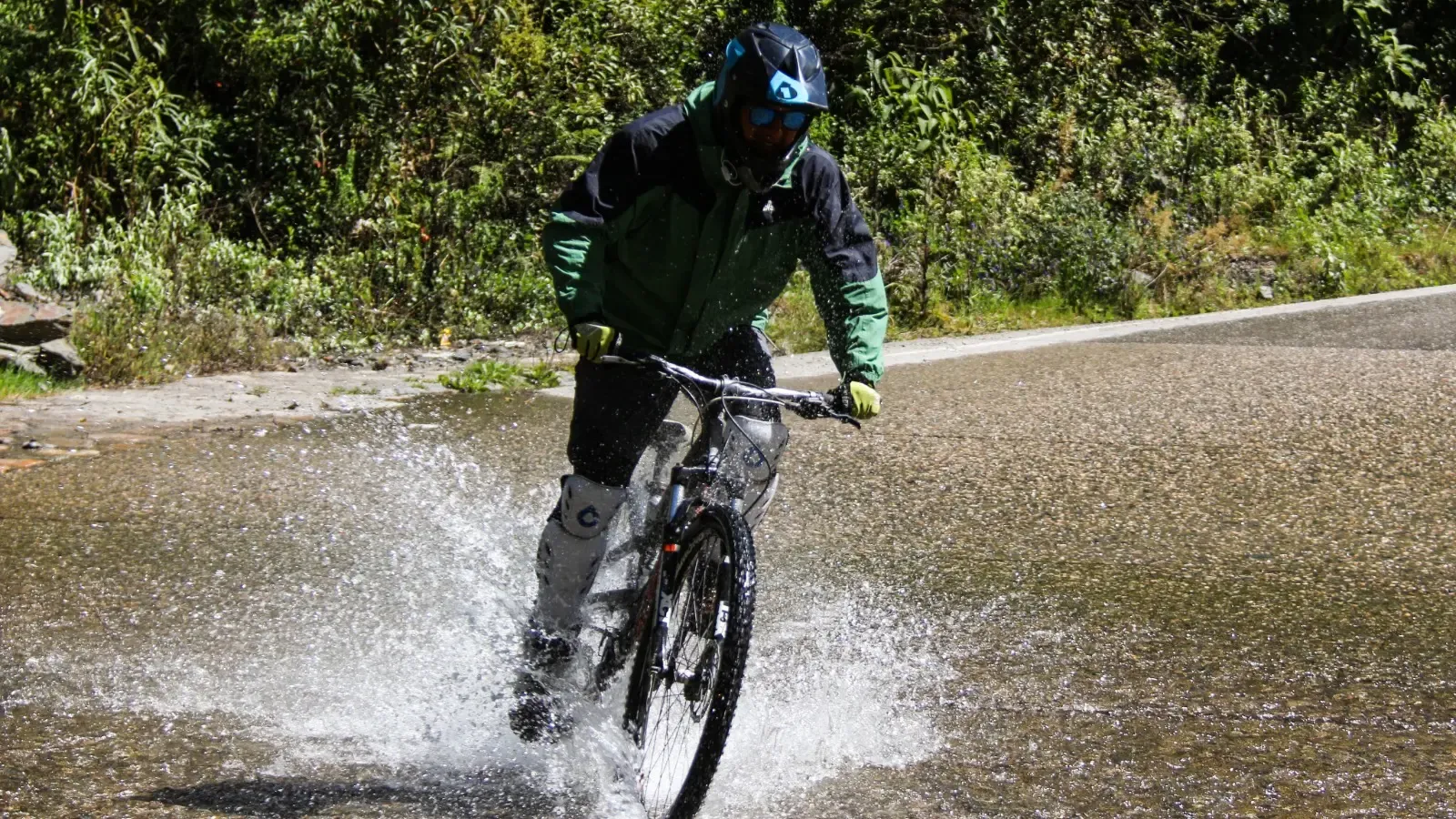
Yes, as long as you follow instructions. Before setting off we check brakes and sizing, hand out helmets, gloves and pads, and explain how to brake through curves. One guide rides in front setting the pace and the support vehicle follows the group. The road has truck and bus traffic, so we ride single file and nobody passes the guide. No experience is required: if a section doesn't feel right, you can jump in the van anytime. In the rain we simply ride slower.
Rafting takes place on a moderate stretch of rapids with river guides, life jacket and helmet, and it's shortened or canceled if the river runs too high, which can happen in the peak rainy season. The zipline is run by instructors using certified harnesses and a double safety line. For the full tour we recommend a minimum age of around 12; for younger kids please ask us first, since each rafting and zipline operator sets its own age and weight limits.
On your own are breakfast on day one in Ollantaytambo (about USD 5–10), lunch on the last day, the Cocalmayo hot springs entrance (around PEN 10–20, it can change) and, if you'd rather not hike, the Machu Picchu bus (about USD 12 each way). Huayna Picchu or Machu Picchu Mountain add roughly USD 60 and must be booked with your ticket. We also rent trekking poles and sleeping bags. We'll confirm current prices when you book.
Machu Picchu tickets have daily caps and are sold only through the official system, so we recommend booking 3–4 months ahead for high season (May to September). We always try for Circuit 2A, the classic route with the postcard view; if it's full we look for alternatives such as 2B, 1B or 3B. No agency gets extra allocation: booking early is what secures a good circuit. For last-minute dates, ask us about real availability.
On a single trip you go from the cold at Abra Málaga, sometimes with fog or hail, to the humid heat of Santa María and Santa Teresa, where it easily tops 25 °C (77 °F). The dry season runs April to October and is the most comfortable. From November to March it rains often, mostly in the afternoons: trails get slippery and the river rises. The trek still runs, but pack a poncho, quick-dry clothes and a little patience.
Yes. Around Santa Teresa, Cocalmayo and the walk from Hidroeléctrica you'll find mosquitoes and tiny biting flies whose bites itch for days. Apply repellent with DEET or picaridin from the morning, reapply after sweating or swimming, and favor long sleeves. No vaccines are required for this route; some travelers ask their doctor about yellow fever, but this isn't lowland Amazon. If you react badly to bites, bring antihistamines.
We stay in simple local hotels, in shared or private rooms depending on your booking, with en-suite bathrooms and hot showers. They're not luxury, but they're clean and well located. Since you carry your own pack for four days, we suggest bringing only the essentials in a 25–30 liter backpack. The rest of your luggage can stay at your Cusco hotel or our office free of charge, ready for you when you return.
“Bike, rafting, zipline and Machu Picchu: the best value adventure. Everything was very well organized and the guide spoke Portuguese.”
Keep exploring
 Express 3 days / 2 nights
Cusco · Abra Málaga · Santa Teresa · Aguas Calientes · Machu Picchu
 Best seller 5 days / 4 nights
Cusco · Humantay Lake · Salkantay Pass · Lucmabamba · Llactapata
Still have questions?
Private
Inca Jungle to Machu Picchu 4 Days
Tell us about your group and a travel advisor will contact you with a tailor-made proposal and price, with no obligation.